
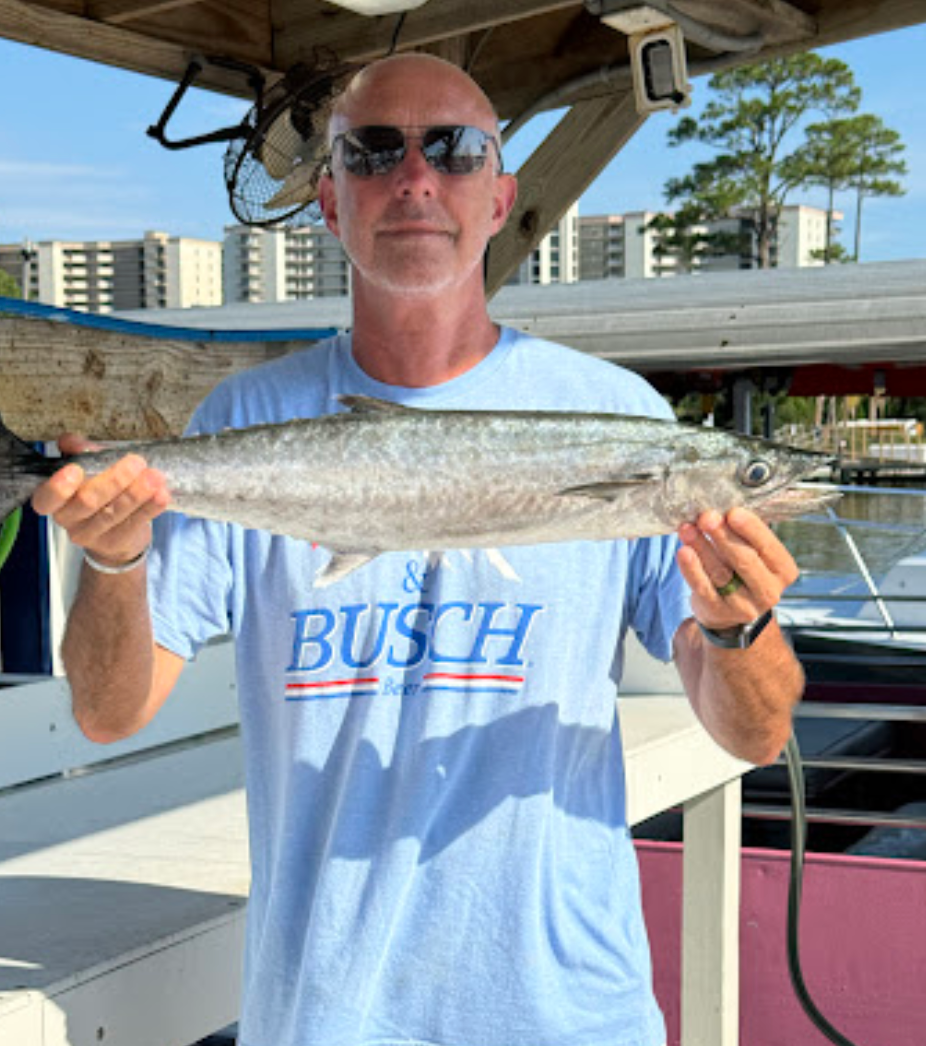
spanish mackerel
What is the minimum size requirement for Spanish mackerel?
There is currently no minimum size requirement for Spanish mackerel.
What is the daily bag limit for Spanish mackerel?
The current daily bag limit for Spanish mackerel is 15 fish per person, per day.
What time of year is best for catching Spanish mackerel?
The peak season for Spanish mackerel typically runs from late March through early September, when warmer Gulf waters bring large schools closer to shore and nearshore structures.
SPANISH MACKEREL
The Spanish mackerel is one of the fastest and most exciting game fish found along the Gulf Coast. Recognized by its sleek, torpedo-shaped body, brilliant silver sides, greenish-blue back, and rows of bright yellow or gold spots, the Spanish mackerel is built for speed. These fish are commonly found throughout the nearshore waters of the Gulf of America and are abundant along Alabama’s coastline, particularly around Fort Morgan, Gulf Shores, and Orange Beach. Their aggressive feeding behavior, blistering runs, and willingness to strike a variety of baits make them a favorite target for anglers of all skill levels.
Spanish mackerel are highly migratory fish that move along the Gulf Coast as water temperatures change throughout the year. They typically arrive in Alabama waters during the spring as the Gulf begins to warm and remain abundant throughout the summer before migrating farther south during the cooler months. During their seasonal migrations, large schools of Spanish mackerel can often be seen feeding aggressively near the surface, creating exciting opportunities for anglers fishing from both boats and shore.
The diet of the Spanish mackerel consists primarily of small baitfish. Sardines, anchovies, glass minnows, threadfin herring, menhaden, and juvenile mullet make up much of their daily food supply. They also feed on shrimp and other small marine organisms when available. Spanish mackerel are visual predators that rely on their exceptional eyesight and incredible speed to chase down prey in open water. Unlike ambush predators that wait for food to come to them, Spanish mackerel actively pursue schools of baitfish, often attacking with lightning-fast strikes that leave little chance for escape.
One of the easiest ways to locate Spanish mackerel is by finding schools of baitfish. Their movements are closely tied to the availability of food, especially anchovies and sardines. When large schools of bait gather near beaches, passes, jetties, or offshore structures, Spanish mackerel are rarely far behind. Diving birds, bait breaking the surface, and fish actively feeding are all signs that Spanish mackerel may be nearby. It is common to see these fish feeding in fast-moving schools that quickly move through an area while aggressively chasing bait.
Spanish mackerel are well known for their explosive strikes and powerful runs. Although they typically weigh between one and five pounds, they fight much larger than their size would suggest. Their speed and constant movement make them excellent sport fish, especially when caught on light spinning tackle. Once hooked, they often make several long, fast runs before being landed, providing plenty of excitement for anglers.
Because they feed so aggressively, Spanish mackerel will strike a wide variety of baits and lures. Live shrimp, live minnows, and small baitfish are all productive natural baits. Artificial lures such as spoons, jigs, soft plastics, and small diving plugs also produce excellent results. Many anglers enjoy trolling small spoons or hard baits behind the boat to cover water and locate actively feeding schools. Others prefer casting directly into feeding fish when schools are visible on the surface. Their aggressive nature makes Spanish mackerel one of the most consistent species for anglers looking to enjoy fast-paced action.
Spanish mackerel possess extremely sharp teeth designed for cutting through schools of baitfish. Because of these razor-sharp teeth, anglers often use short sections of wire leader or heavier fluorocarbon leader to prevent fish from cutting the fishing line during the fight. Even experienced anglers are often surprised by how quickly a Spanish mackerel can slice through lighter fishing line.
In addition to providing exciting fishing opportunities, Spanish mackerel are also highly regarded as table fare. Their firm, flavorful meat is excellent when grilled, baked, broiled, smoked, or fried. Many anglers prefer to prepare Spanish mackerel fresh shortly after they are caught, as the quality of the meat is at its best when enjoyed soon after harvest. Their rich flavor makes them a favorite among seafood lovers throughout the Gulf Coast.
Spanish mackerel fishing is available throughout much of the year in Alabama, although spring, summer, and early fall typically offer the most consistent action. Their seasonal migrations, combined with large schools of baitfish, create exciting opportunities for both experienced fishermen and families looking to enjoy a fun day on the water. Because they often feed close to shore, Spanish mackerel are accessible to anglers fishing from boats, piers, jetties, and beaches.
Current Alabama regulations allow anglers to harvest 15 Spanish mackerel per person per day, and there is no minimum size limit. As with all saltwater species, fishing regulations can change, so anglers should always review the current Alabama saltwater regulations before heading onto the water.
With their incredible speed, aggressive feeding behavior, exciting fights, and excellent table quality, Spanish mackerel remain one of the Gulf Coast’s most popular nearshore game fish. Whether you’re casting into a feeding frenzy or trolling along Alabama’s beautiful coastline, few fish provide as much fast-paced action as the Spanish mackerel. For anglers visiting Fort Morgan, Gulf Shores, and Orange Beach, targeting Spanish mackerel is an exciting way to experience the incredible fishing opportunities the Alabama Gulf Coast has to offer.